
Cobalt vs titanium drill bits
Cobalt is an alloy through the steel. Titanium is a coating on top. Here is how the two compare, what HSS grades like M2, M35 and 4341 mean, and which to stock for the customers you sell to.
The short answer
Cobalt is in the steel. Titanium is on the steel.
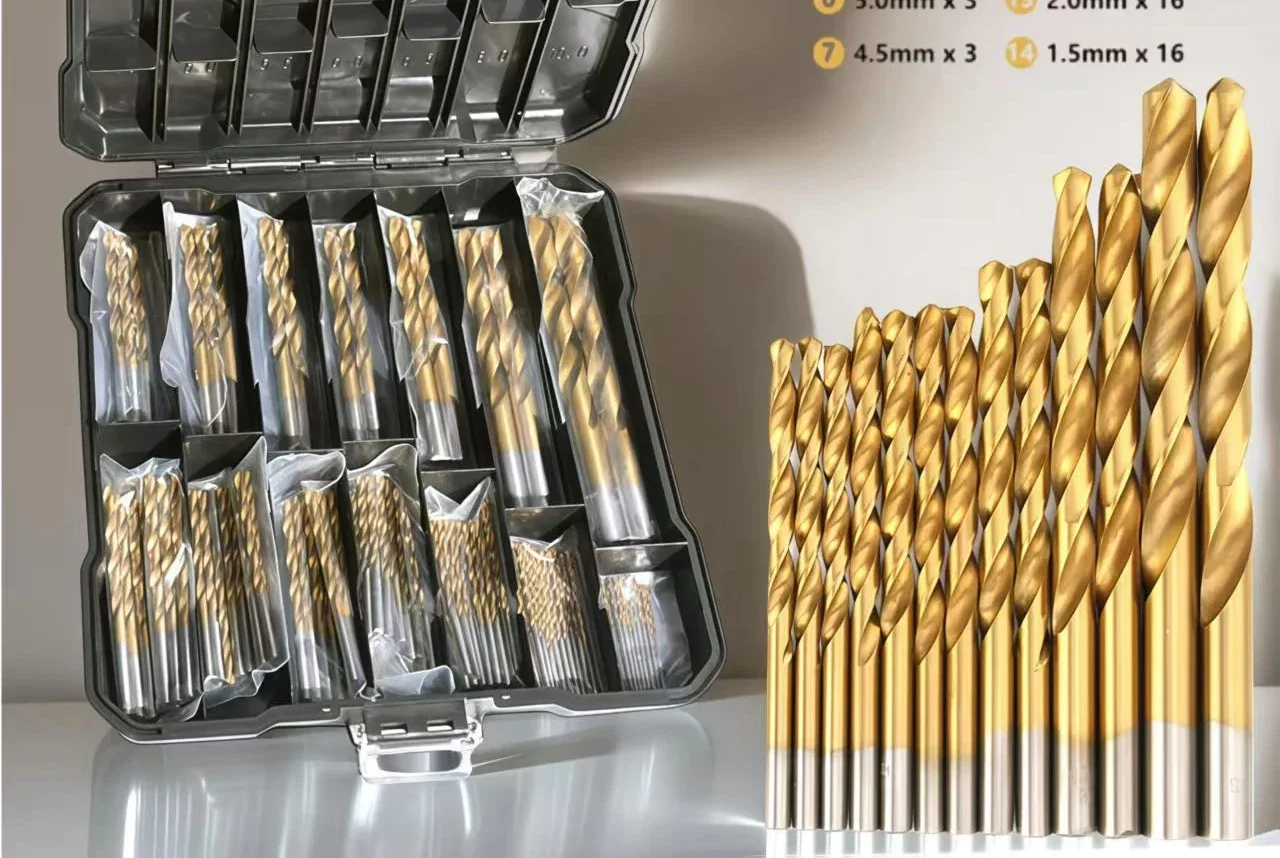
Cobalt drill bits are high-speed steel with 5% or 8% cobalt alloyed through the whole bit, so they stay hard when hot and cut stainless steel and other hard metals. Titanium drill bits are standard HSS with a thin titanium nitride coating that reduces friction, but the coating wears and sharpening removes it. Choose cobalt for hard metals, titanium for everyday steel, wood and plastic.
Cobalt drill bits
High-speed steel with cobalt alloyed through the whole bit.
- Cobalt content
- 5% (M35) or 8% (M42)
- Typical hardness
- HRC 65-67
- Resharpening
- Keeps its properties
- Trade-off
- Costs more, more brittle
Titanium drill bits
Standard HSS with a thin titanium nitride (TiN) coating.
- Coating thickness
- 1-3 microns
- Base steel
- Varies: 4241 up to M2
- Resharpening
- Removes the coating
- Trade-off
- Only as good as the steel under it
HSS drill bit grades compared
A box marked HSS tells you little. The grade decides hardness and how long the edge lasts. M2, M35 and M42 are international grades; 4341 and 4241 are Chinese low-alloy grades with less molybdenum and vanadium than M2.
M42
Cobalt HSS
Hardened and heat-treated steel, titanium, high-temperature alloys
- Cobalt
- 8%
- Hardness
- HRC 65-67
- Source
- ITM Tools
M35
Cobalt HSS
Stainless steel, cast iron and other hard, tough metals
- Cobalt
- 5%
- Hardness
- HRC 65-67
- Source
- ITM Tools
M2
Standard HSS
General purpose: carbon steel, brass, bronze, aluminum
- Cobalt
- None
- Hardness
- HRC 63-65
- Source
- ITM Tools
4341
Low-alloy HSS
Soft metal, plastic and wood; common in DIY sets
- Cobalt
- None
- Hardness
- HRC 58-60
- Source
- Coinch Tools
4241
Low-alloy HSS
Thin sheet, plastic and household drilling; budget sets
- Cobalt
- None
- Hardness
- HRC 56-58
- Source
- Coinch Tools
Show as a table
| Grade | Steel | Cobalt | Hardness (HRC) | Typical use | Source |
|---|---|---|---|---|---|
| M42 | Cobalt HSS | 8% | 65-67 | Hardened and heat-treated steel, titanium, high-temperature alloys | ITM Tools |
| M35 | Cobalt HSS | 5% | 65-67 | Stainless steel, cast iron and other hard, tough metals | ITM Tools |
| M2 | Standard HSS | None | 63-65 | General purpose: carbon steel, brass, bronze, aluminum | ITM Tools |
| 4341 | Low-alloy HSS | None | 58-60 | Soft metal, plastic and wood; common in DIY sets | Coinch Tools |
| 4241 | Low-alloy HSS | None | 56-58 | Thin sheet, plastic and household drilling; budget sets | Coinch Tools |
Hardness ranges are typical published figures from the sources listed. Actual values depend on heat treatment and the finished tool, so ask for test results for your batch.
Coatings and finishes
A finish changes the surface, not the steel. Black oxide and titanium both sit on top of HSS, while cobalt runs all the way through.
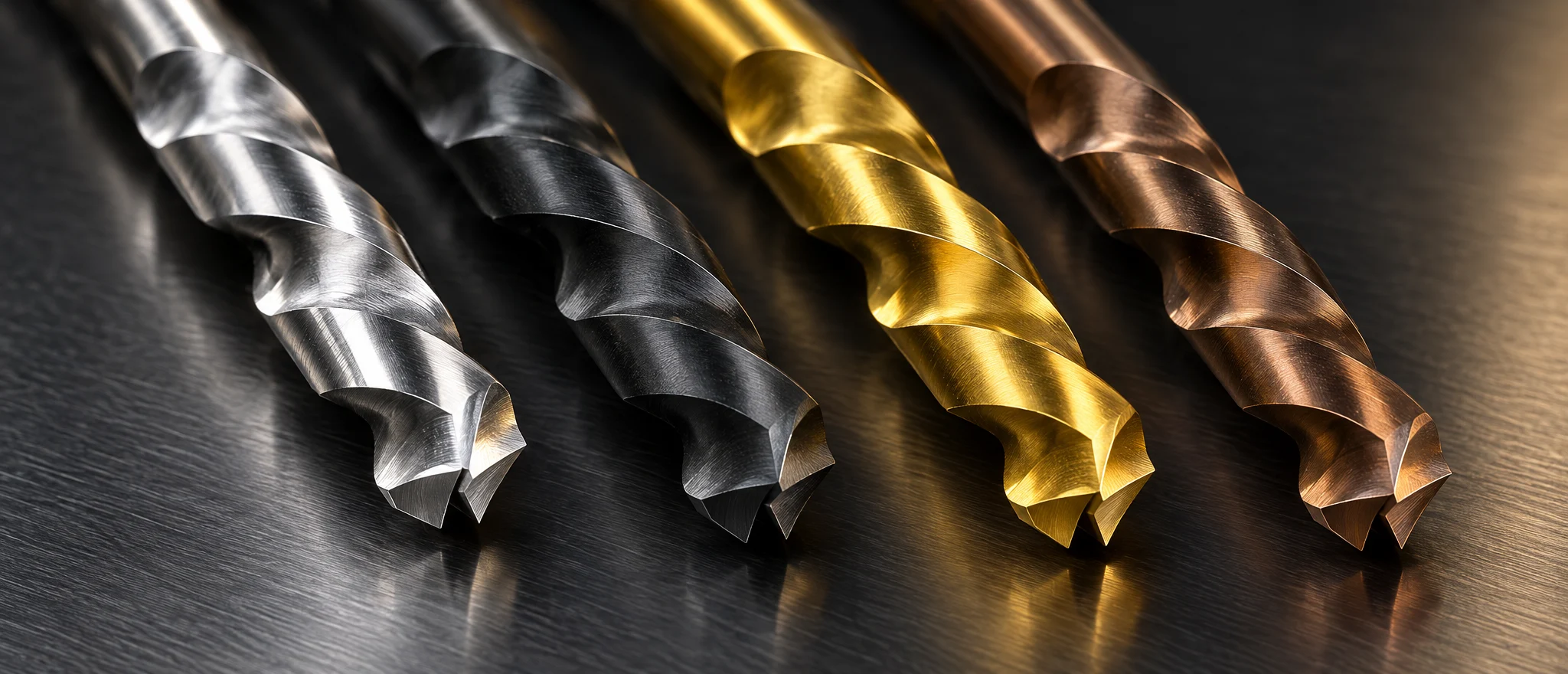
Bright (uncoated)
Plain HSS with no surface treatment.
Good for
Can be reground to the supplier's instructions with nothing lost.
Watch for
No extra corrosion or wear protection.
Black oxide
A surface treatment on HSS, not a hard coating.
Good for
Adds a small amount of corrosion protection at little cost.
Watch for
The slightly porous surface picks up soft metal, so it suits copper and aluminum poorly.
Titanium (TiN)
A 1-3 micron titanium nitride layer over HSS.
Good for
Harder, slicker surface that reduces friction and wear in repetitive drilling.
Watch for
Sharpening strips the coating from the cutting faces.
Cobalt (HSS-Co)
Cobalt alloyed through the steel, often with a bronze or amber color.
Good for
Most wear resistant of the HSS options and holds hardness when hot.
Watch for
Harder also means more brittle, so it snaps more easily if forced.
Which grade to stock for your customers
Match the grade to what your customers drill most. These are common starting points; we quote the grade and finish you specify.
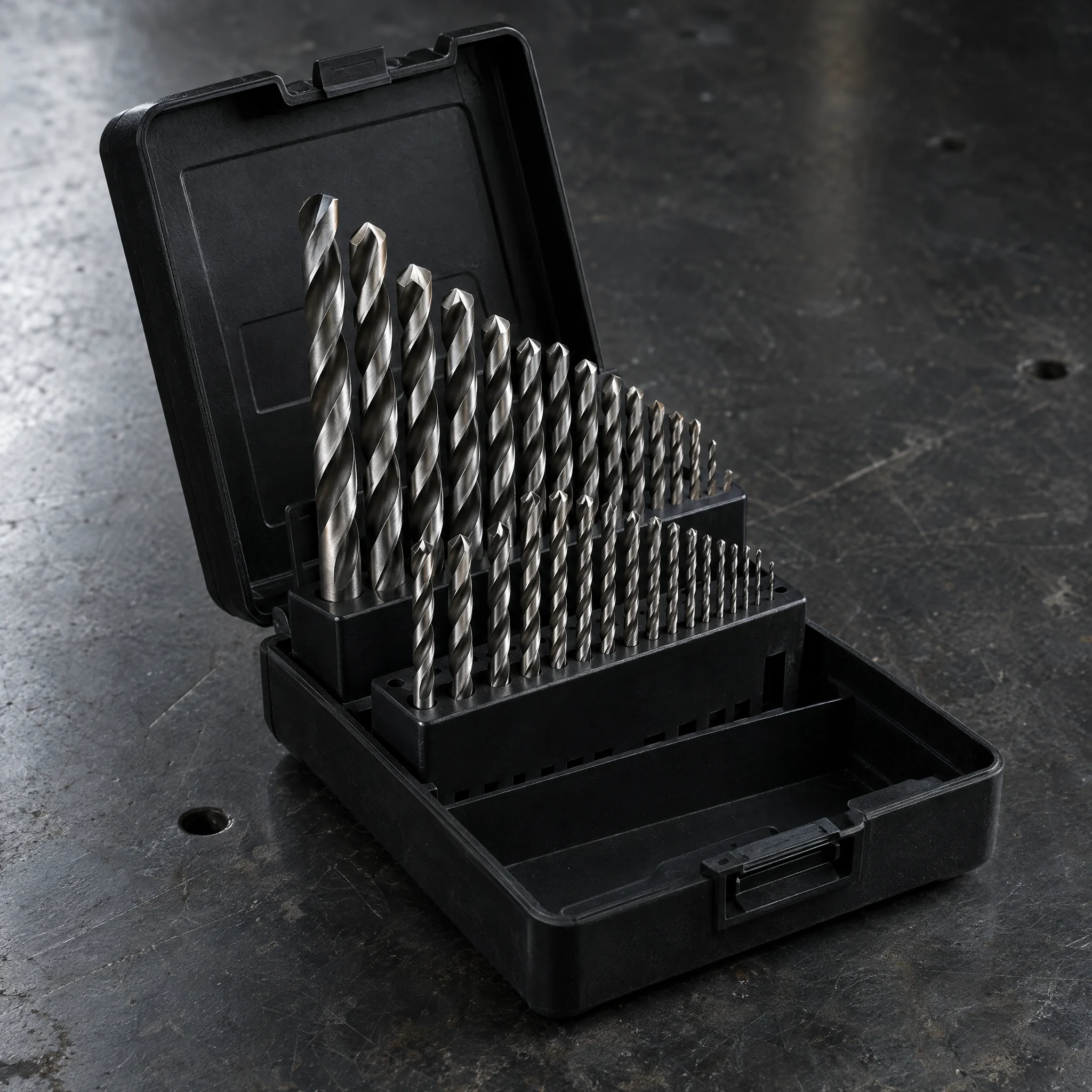
DIY and hardware retail
Homeowners drilling wood, plastic and the odd steel bracket.
4341 or M2 sets in titanium or black oxide
Shoppers compare size range and price per set. A titanium finish stands out on the shelf, and the grade decides how long it lasts.
HSS twist drill sets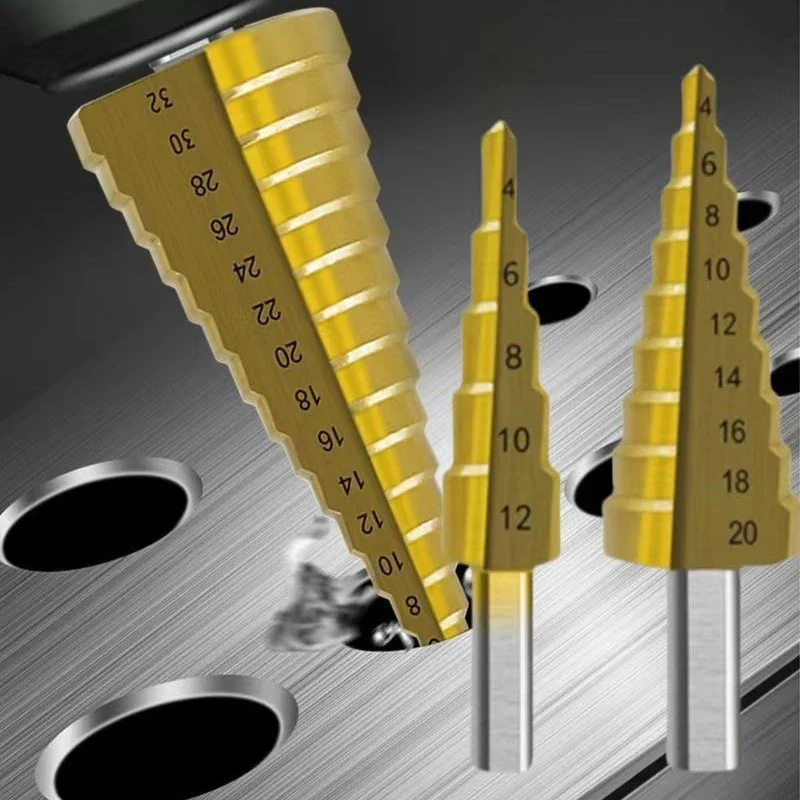
Trade and contractors
Electricians, installers and builders drilling mild steel daily.
M2 HSS with a 135° split point
M2 is the general-purpose standard. A split point starts without walking, and a titanium coating helps in repeat holes through plain steel.
Step drills for sheet metal
Metalwork and maintenance
Fabricators and plant engineers drilling stainless and cast iron.
M35 cobalt, with M42 for hardened steel
Cobalt grades are made for work-hardening stainless and abrasive metals beyond the reach of standard HSS.
Private label optionsHow to make sure you get the grade you paid for
Grade swaps, such as 4341 sold as M2, are hard to spot by eye. Four checks protect you with any supplier.
01
Write the grade on the order
Put "M2" or "M35" and the finish on the purchase order and packaging spec. "HSS" alone covers everything from 4241 to M42.
02
Mark it on the shank
Ask for the grade to be laser-marked on each shank, such as "HSS-Co M35", and check the marking on your sample.
03
Ask for a material report
Request the steel's material certificate or a hardness test result for your batch before you approve production.
04
Match bulk to the sample
Keep your approved sample as the reference. We check finished bits against it before packing.
Cobalt and titanium drill bit questions
Short answers to what distributors and their customers ask most.
Are cobalt drill bits better than titanium drill bits?
For stainless steel, cast iron and other hard metals, yes. Cobalt is alloyed through the whole bit, so it keeps its hardness when hot. For wood, plastic and plain steel, a titanium-coated HSS bit costs less and does the job. Cobalt is also more brittle, so it breaks more easily if forced.
Is a titanium drill bit made of titanium?
No. A titanium drill bit is high-speed steel with a 1 to 3 micron coating of titanium nitride. The coating adds hardness and reduces friction, but the steel underneath decides how the bit performs once the coating wears.
Can you sharpen cobalt and titanium drill bits?
Cobalt bits can be resharpened and keep their properties, because the cobalt runs through the steel. Sharpening a titanium bit removes the coating from the cutting faces, so it never performs quite as well as when new.
What is the difference between M2 and M35?
M35 is M2-type high-speed steel with about 5% cobalt added. The cobalt raises hot hardness, so M35 holds its edge in stainless steel and other tough metals where M2 dulls faster. M2 has no cobalt and is the general-purpose standard.
What does HSS 4341 or 4241 mean?
They are Chinese low-alloy high-speed steel grades with less molybdenum and vanadium than M2. Exporters publish hardness of about HRC 58 to 60 for 4341 and HRC 56 to 58 for 4241, against HRC 63 to 65 for M2. They are common in budget and DIY drill sets.
Black oxide or titanium: which should I stock?
Black oxide is a low-cost surface treatment with a little corrosion protection. Titanium nitride is a hard coating that reduces friction in repeat drilling. Both sit on HSS, so for the same steel grade, titanium is the step up, and the grade matters more than either finish.
Sources
Grade compositions, hardness and coating facts on this page come from these published sources.
- 1.HSS tool data (catalog 2024, pp. 8-9), ITM Tools
- 2.What's the difference: metal-twist drill bits, Fine Homebuilding
- 3.HSS 4341 vs M2 vs M35 cobalt: physical differences explained, Borui Tools
- 4.Understanding HSS grades for drill bits: M42, M35, M2, 4341 and 4241, Danyang Coinch Tools
Get drill bits in the grade you specify
Tell us the grade, finish, sizes and quantity. We match your request to a partner factory and quote with samples you can check.